 LegitScript Certified
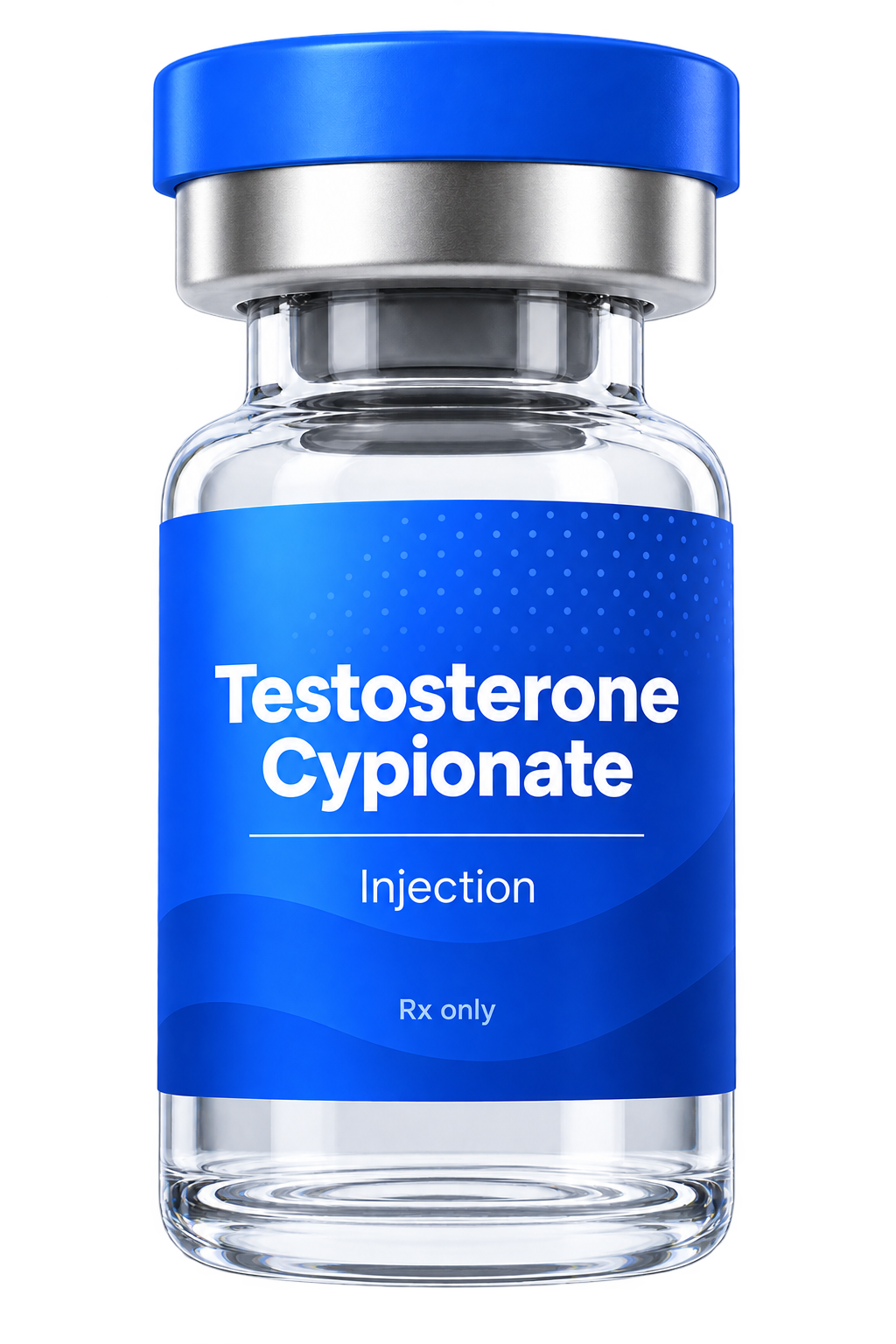


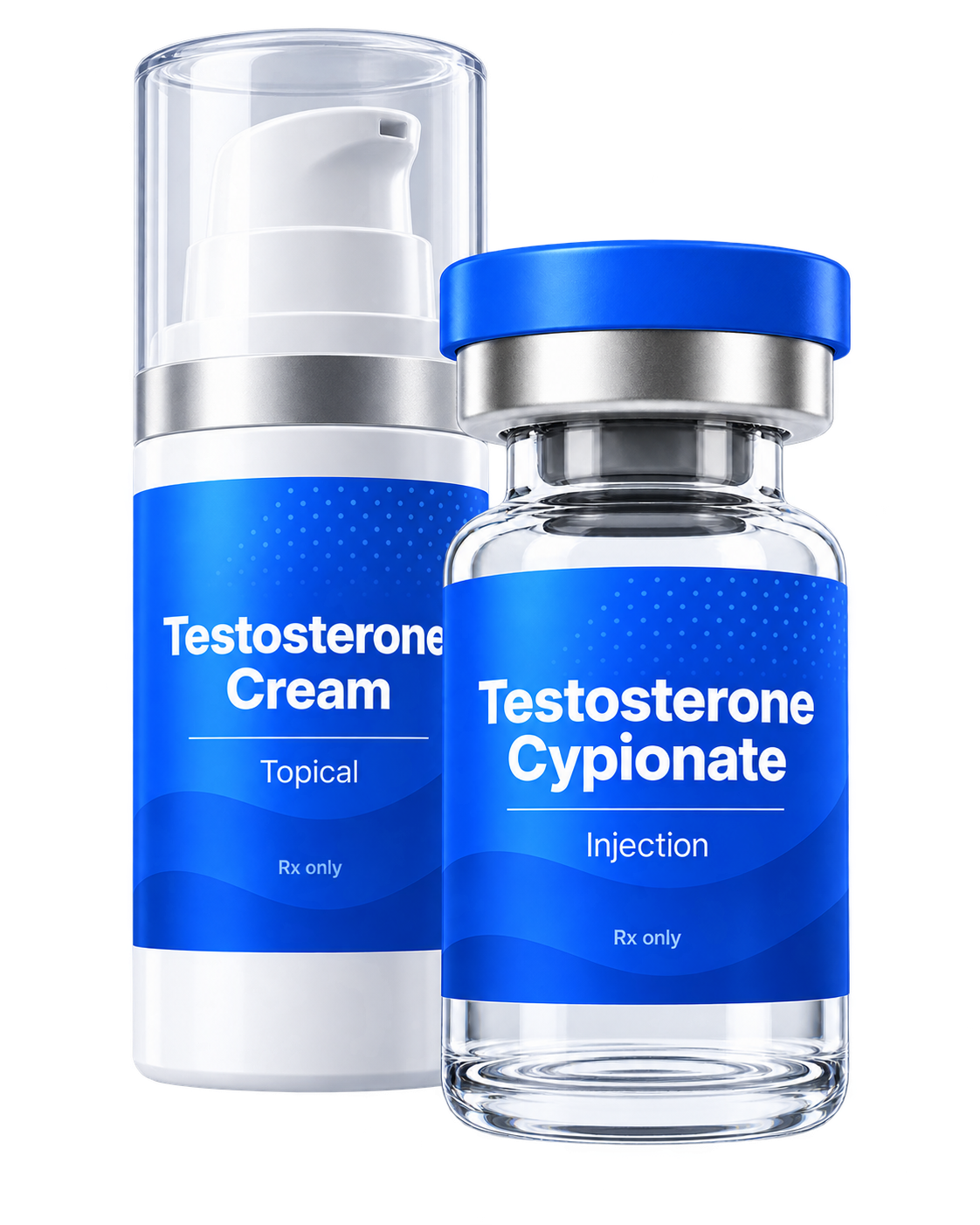
Testosterone Cypionate
Injectable testosterone replacement therapy for men, dosed and monitored by a provider.
You are not charged for medication until a licensed provider has reviewed your information and approved a prescription. Completing an intake form does not guarantee approval.
Prescription required. Start your consultation — a licensed provider determines if treatment is right for you.
It depends on the medication. Compounded medications are not FDA-approved products and are not reviewed by the FDA for safety, effectiveness or quality. Ask your provider which applies to you.
Pending medical review — not for production
Drafted 2026-07-09. This content has not yet been reviewed and signed off by a licensed clinician.
How it works
Testosterone cypionate is a long-acting, injectable form of testosterone — the body's own primary male sex hormone. It works by supplying testosterone that binds androgen receptors throughout the body. The cypionate ester releases slowly from the injection site, which is what extends its duration between doses.
Dosing
Given as an intramuscular or subcutaneous injection, commonly on a weekly to every-two-week schedule per labeling. Your provider adjusts the dose against your serum testosterone and hematocrit, and against how you feel — there is no single correct dose.
What's included
- Your provider decides the dose and whether it changes
- Bloodwork monitored on an ongoing basis, including hematocrit
- Message your care team between visits, without booking an appointment
What to expect
- 01Baseline labs before you start, including total testosterone and hematocrit.
- 02A licensed provider reviews your labs and history, and prescribes only if treatment is appropriate for you.
- 03Follow-up bloodwork to confirm your levels and check hematocrit; your dose is adjusted from those results.
- 04Ongoing provider messaging, refills, and periodic re-testing for as long as you're in treatment.
- 05Your provider will set expectations for your own situation. Individual responses to testosterone therapy vary.
Important Safety Information
Testosterone Cypionate is a prescription medication and is not right for everyone. A licensed provider determines whether it is appropriate for you. This is not a complete list of risks — read the medication guide and talk to your provider.
Common side effects
- Acne or oily skin
- Fluid retention
- Breast tenderness or enlargement (gynecomastia)
- Mood changes
- Injection-site soreness
Serious risks
- Polycythemia — a rise in red blood cells and hematocrit, which requires ongoing monitoring
- Reduced sperm production and impaired fertility
- Worsening of benign prostatic hyperplasia (BPH) symptoms
- Aggravation of sleep apnea
- Labeling carries warnings regarding possible cardiovascular risk and venous thromboembolism
Do not take if
- Men with known or suspected prostate cancer or breast cancer
- Women who are pregnant or may become pregnant — testosterone can harm a fetus
- Anyone with a serious hypersensitivity to testosterone cypionate
- Used with caution in significant cardiac, kidney or liver disease, untreated severe sleep apnea, or a high baseline hematocrit
Report side effects to your provider. You may also report them to the FDA at 1-800-FDA-1088(opens in a new tab).
Questions, answered
Is testosterone therapy through 20Science legitimate?
Yes. Testosterone cypionate is a prescription medication and a DEA Schedule III controlled substance. It can only be prescribed by a licensed provider after reviewing your history and your bloodwork, and it is dispensed by a licensed pharmacy. There is no way to buy it here without that review.
Do I need lab work before starting?
Yes. A provider cannot responsibly prescribe testosterone without baseline bloodwork, including total testosterone and hematocrit. We'll guide you to a nearby lab or an at-home option, and the results go to your provider.
Will testosterone therapy affect my fertility?
Testosterone therapy suppresses the body's own testosterone production and can reduce sperm production and impair fertility. If you are planning to father children, tell your provider before starting — it changes the clinical picture and there may be alternatives to discuss.
Is TRT safe long term?
Testosterone therapy carries real risks that require monitoring, including a rise in red blood cells, effects on the prostate, worsening sleep apnea, and labeling warnings regarding cardiovascular risk and blood clots. That is precisely why treatment includes periodic bloodwork rather than a prescription and silence.
Do I have to stay on it forever?
That's a decision for you and your provider. Testosterone therapy suppresses your natural production while you're on it, so stopping is something to plan clinically rather than do abruptly.
How is my dose decided?
Your provider decides the dose, and whether it changes over time. Ask your provider what they will check before and during treatment.
Is this covered by insurance?
20Science does not bill insurance. You pay one transparent price for your medication, provider oversight, and shipping.
See if Testosterone Cypionate is right for you
A licensed provider reviews your history and decides whether to prescribe. No in-person appointment required.